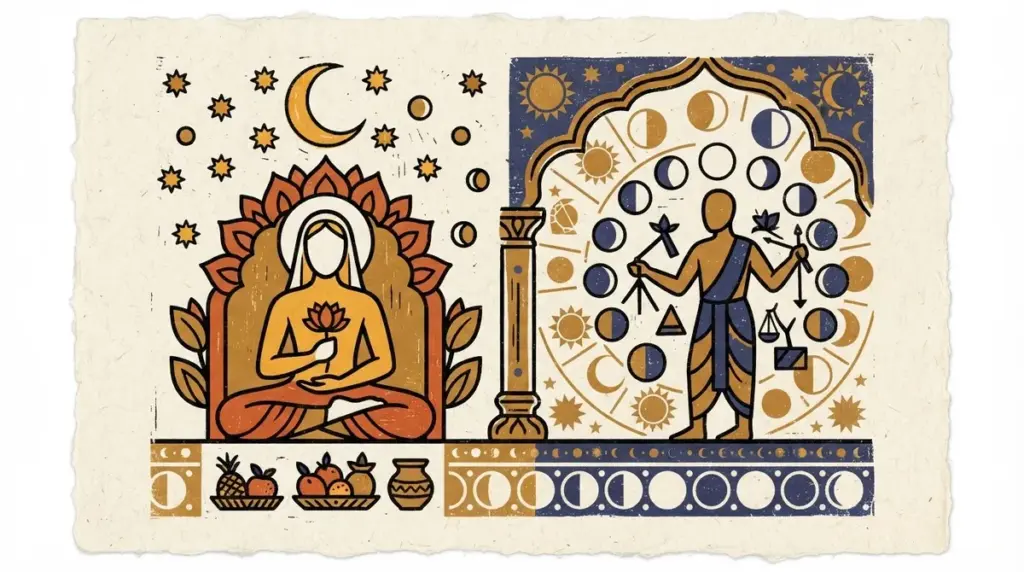
The Ekadashi tithi, or lunar day, occupies a unique place in the Vedic calendar. When we look at the ekadashi tithi compared with others, we see it is more than just a count of days. It is the eleventh day of the lunar fortnight. It serves as a time for personal reflection and inner discipline. Many people use the daily-panchang to track these cycles.

The meaning of Ekadashi tithi compared with others
A tithi represents the time taken for the Moon to move twelve degrees away from the Sun. While other days mark various activities, Ekadashi focuses on the senses. The name comes from ‘Eka’ meaning one and ‘Dasha’ meaning ten. This signifies the eleven senses, which include five organs of perception, five of action, and the mind. Unlike the full moon or new moon, this day is often for quiet withdrawal.
How tradition links Ekadashi tithi compared with others
Tradition places this day in the ‘Nanda’ group of tithis. Nanda means joy or prosperity. This makes it distinct from days associated with conflict or heavy labor. Many texts state that this day is dedicated to Lord Vishnu, the preserver. It is a time to purify the mind through fasting and prayer. You can learn more about the broader structure of the calendar in our guide on the five-limbs-of-panchang.
Ekadashi tithi compared with others: what readers notice
Observers often note a shift in focus on this day. While other lunar days might be for starting big projects or social events, this day encourages rest. You might notice a lighter feeling in your daily routine. By avoiding grains and heavy meals, many find it easier to focus on their inner state. It is a day to step back from the busyness of the world.
Where schools differ on Ekadashi tithi compared with others
There are different schools of thought regarding the start of the fast. Some traditions calculate the timing based strictly on sunrise. Others look at the specific moment the tithi touches the sun at dawn. You may find slight variations in the calendar depending on the region. These differences highlight that local tradition is a key part of the practice. Always check your kundli if you want to understand your personal connection to these cycles.

A calm way to reflect on compared with others with Ekadashi tithi
Consider this example: if the eleventh day falls during a busy work week, you can still practice simple mindfulness. You do not need to change your entire life to acknowledge the day. A simple intent to be kind or to speak less can be a form of observance. Reflect on how your mood shifts compared to other days in the lunar month. Use this time to observe your own habits without judgment.
Practical observation and the lunar cycle
The transition from the tenth day to the eleventh is a shift in energy. Many people prepare by finishing tasks before the day begins. They then conclude the fast on the twelfth day, known as Dwadashi. This period of fasting is called Vrata, which means a vow or resolution. This structured approach helps in maintaining a calm mental state. Astrology is for reflection and guidance, and it is not a substitute for professional advice.