
When you enter the Ketu Antardasha Budha Mahadasha quick reference card phase, you begin an 11.9-month period of internal shift. In the Vimshottari Dasha system, a Dasha is a planetary period that reveals karmic potentials. A Mahadasha is a major cycle, and an Antardasha is a sub-period. This specific window blends Mercury’s analytical focus with Ketu’s urge for detachment. You can track your own timing using our vimshottari-dasha tool.
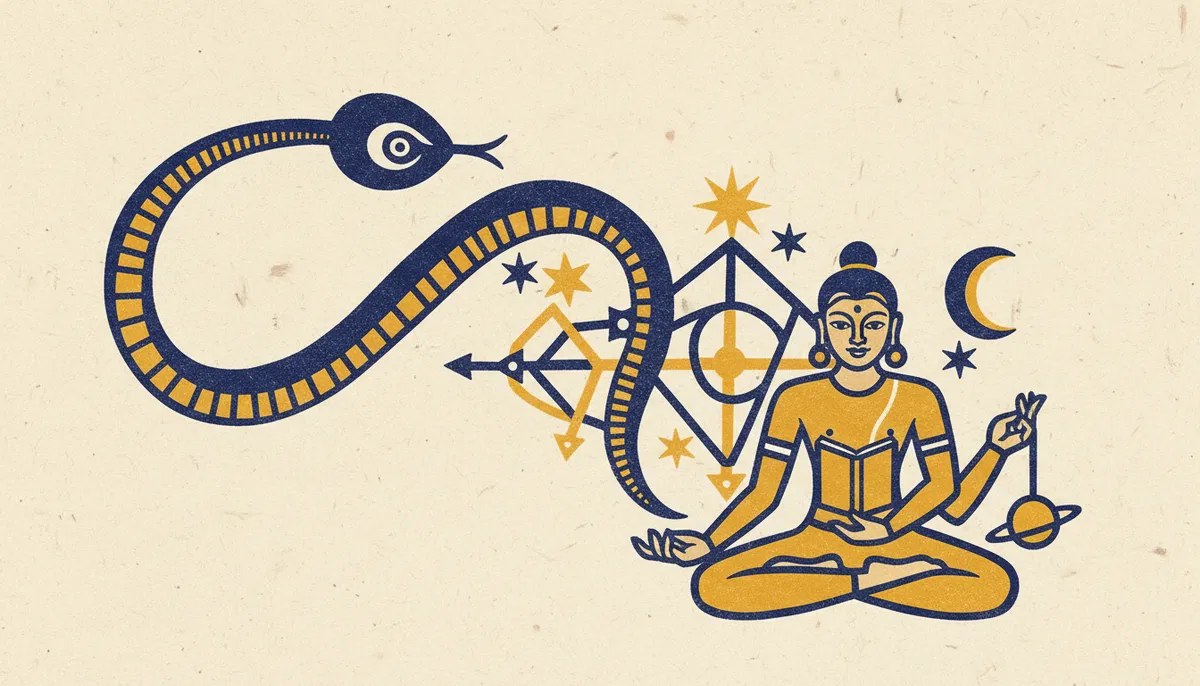
Understanding the Ketu Antardasha Budha Mahadasha quick reference card
This period often highlights a conflict between your logical mind and your inner intuition. Mercury is Budha, the planet of communication and intellect. Ketu is the south node of the Moon, representing spiritual release and hidden knowledge. During these 11.9 months, you might find your usual desire for data or conversation replaced by a need for solitude. It is a time when the mind wants to process, but the spirit wants to let go.
Traditional views on the Ketu Antardasha Budha Mahadasha quick reference card
Many classic texts suggest this phase serves as a bridge between worldly success and spiritual growth. Mercury governs your day-to-day work, while Ketu acts as a catalyst for cutting ties with outdated habits. If Mercury is strong in your chart, you might excel in technical research or complex problem-solving. If Ketu is dominant, you may feel pulled toward meditation or abstract study. This balance is central to the tradition of these planetary cycles.
Observations during the Ketu Antardasha Budha Mahadasha quick reference card
Readers often notice a cooling of their social life during this phase. You might find that your interest in small talk fades. Some people report a heightened sensitivity to their environment. Others notice that they prefer working alone rather than in teams. This is a natural result of Ketu’s energy meeting Mercury’s focus. It is not a sign of failure but a shift in how you prioritize your mental energy.
School variations regarding the Ketu Antardasha Budha Mahadasha quick reference card
Different schools of Vedic astrology hold unique views on how these planets interact. Some experts focus on the house placement of Mercury to see if the intellect remains sharp. Others look at Ketu’s position to determine if the detachment is peaceful or abrupt. You can explore your own chart’s structure using our divisional-charts tool. There is no single outcome for everyone, as the chart as a whole matters most.
Reflecting on the Ketu Antardasha Budha Mahadasha quick reference card
Astrology is for reflection and guidance, and it is not a substitute for professional advice.
Use this time to observe your own thought patterns. Are you overthinking, or are you gaining deep insight? Keeping a journal can help you distinguish between the two. Remember that this period is temporary. It lasts less than a year, making it a short chapter in your overall life story. For more context on how these periods shape your life, see our vimshottari-dasha-reading-tips post.
A worked example for the cycle
Consider a person with Mercury in the third house and Ketu in the ninth house. During this Antardasha, they might feel a strong urge to write or teach on spiritual topics. The third house governs communication, while the ninth house rules philosophy. The combination creates a bridge where their intellect serves their spiritual path. This person would likely find success in writing books or teaching meditation classes. They should avoid over-analyzing their spiritual experiences, as Mercury can sometimes create doubt where Ketu requires faith.