
When you explore the Vedic calendar, understanding a shakuni karana worked example helps clarify how a specific lunar segment operates. A karana is a half of a tithi, representing a six-degree distance between the Sun and the Moon. There are eleven such units in a lunar month. Seven repeat in a cycle, while four remain fixed. Shakuni is one of those four fixed units that appear only once per month. To see how the broader calendar operates alongside this, you can read more on our five limbs of panchang overview. By looking at a concrete illustration, you can see how this unit fits into daily timekeeping.
What Shakuni Karana Means for a Practical Study
In traditional Vedic timekeeping, the sky is divided into precise geometric parts. Each tithi, or lunar day, contains two karanas. Most karanas repeat regularly across the waxing and waning fortnights. Fixed karanas, however, arrive only near the dark junction of the month. Shakuni arrives during the second half of the fourteenth lunar day of the dark fortnight. This specific placement makes it unique compared to movable units like Bava or Balava. To check current calendar details right now, you can visit our daily panchang tool.
How Tradition Links Shakuni Karana With Timings
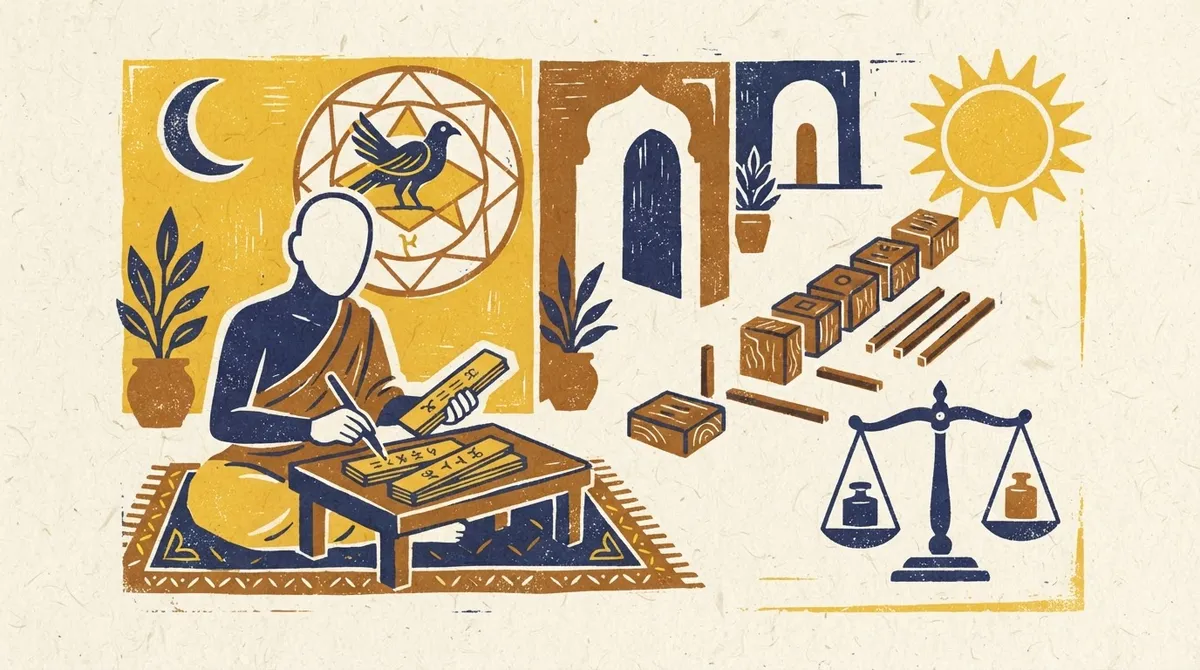
Traditional texts associate each fixed segment with specific symbols and traditional themes. Shakuni is often linked with a bird symbol and traditional commentaries connect it with the deity Kali. Classical writers note that periods governed by this fixed segment are suited for specific tasks. These include strategic planning, overcoming difficult obstacles, or preparing herbal medicines. People often look up these details when they want to align specific reflections with traditional calendar markers. You can also explore our panchang page for more calendar tools.
A Detailed Shakuni Karana Worked Example for Daily Life
Let us walk through a clear scenario to see how this works in practice. Suppose an observer checks the calendar during the dark fortnight. The fourteenth lunar day is ending, and the Moon is completing its final degrees relative to the Sun. The first half of that fourteenth day used a movable karana. As the Sun and Moon distance crosses the threshold into the second half of that fourteenth tithi, the active unit shifts to Shakuni. This particular span lasts until the end of that lunar day before the new moon takes over. Observers note this transition to mark specific times for quiet study or personal strategy sessions.

Shakuni Karana and Worked Example: What Readers Notice
Many readers wonder what they might observe during such a period. Traditional books suggest that those born under this influence may show strong intuitive traits and analytical skills. When people run a practical test of these timings, they often focus on mental clarity rather than external events. They use the quiet nature of this lunar phase for inward reflection. The focus remains on personal organization and careful thought rather than rushing into new worldly ventures. This approach respects the traditional character of the fixed units without overstating their effects.
Where Schools Differ on Shakuni Karana and Worked Example
Different schools of Vedic astrology hold varied views on fixed karanas. Some traditional scholars view these rare segments as less favorable for routine business launches or joyous celebrations. Other texts suggest they offer deep potential for spiritual sadhana, mantra practice, and working with subtle omens. Regional calendars may also calculate the exact minute of transition slightly differently based on sunrise rules or geographic location. These diverse opinions remind us that calendar study allows for personal interpretation rather than rigid rules.
A Calm Way to Reflect on Worked Example With Shakuni Karana
Approaching calendar studies requires balance and calm observation. Instead of viewing specific time segments with anxiety, modern students use them as tools for structure. When you study a shakuni karana worked example, treat it as a window into ancient mathematical traditions. It shows how astronomers mapped the sky into small, manageable segments. Take time to observe your own schedule and find moments for quiet focus. Astrology is for reflection and guidance, and it is not a substitute for professional advice. Keep your study grounded, simple, and steady as you explore the calendar.