
When you look at your birth chart, learning about mars in kundli significations helps you understand your drive and courage. In Vedic astrology, a birth chart is called a kundli. It maps planet positions at your exact birth moment. Mars is known as Mangal, Kuja, or Angaraka in Sanskrit. It represents energy, stamina, physical strength, and self-defense. By studying Mars, you can see how you face challenges and protect your personal space.

Understanding Mars in Kundli Significations
In Vedic tradition, Mars is viewed as the commander-in-chief among planets. It supplies the impulse to start projects and push through difficulties. Without this energy, ideas remain purely theoretical. Mars brings the physical effort required to complete demanding tasks.
A planet that signifies a specific life domain is called a karaka. Mars serves as the natural karaka for courage, land, and younger siblings. It also governs physical vigor, motor skills, and technical aptitude. When you generate your chart using a kundli tool, Mars shows where you invest personal energy.
Mars rules two zodiac signs: Aries and Scorpio. It reaches its exaltation in Capricorn, where its energy is disciplined and focused. In Cancer, its force becomes less direct. Understanding these placements helps you notice how Mars operates across different areas of life.
The Vimshottari dasha period for Mars lasts for seven years. A dasha is a major planetary period that highlights specific themes over time. During a Mars period, topics like courage, land, and physical activity often become more prominent.
How Vedic Tradition Defines the Core Roles of Mangal
Classical texts describe Mars as a fiery and intense planet. It is classified as a natural malefic planet. This traditional term does not mean Mars brings bad fortune. It simply means Mars works through force, sharp action, and quick decisions. Fire can cook a meal or burn wood. In the same way, intense personal energy requires careful management.
In the physical body, Mars governs blood, muscles, and bone marrow. It relates directly to vitality, physical exercise, and endurance. People with prominent Mars placements often enjoy active movement, sports, or practical crafts. They may also feel comfortable working with tools, machinery, or technical concepts.
Mars also shapes how you handle interpersonal conflict. A balanced Mars placement supports clear personal boundaries and direct communication. It allows a person to stand up for fairness without resorting to unnecessary anger. When energy flows smoothly, action becomes constructive and protective.
mars in kundli significations: key life domains
When astrologers analyze mars in kundli significations, they examine specific areas of life governed by this planet. Here are the main domains connected with Mars in classical texts:
- Courage and initiative: Mars gives the bravery needed to confront difficulties and start new endeavors.
- Younger siblings: Mars represents relationships and shared experiences with younger brothers and sisters.
- Property and real estate: Land, building construction, and physical assets fall under Mars.
- Technical skills: Engineering, surgery, mechanics, and work with sharp instruments connect to Mars.
- Leadership and protection: Executive action, emergency services, and law enforcement align with this planet.
Mars also casts special planetary aspects called drishtis. In Vedic astrology, an aspect is called a drishti. While most planets influence only the seventh house from their location, Mars has extra aspects. It influences the fourth, seventh, and eighth houses from its position. This means Mars affects multiple house topics simultaneously.
How Mars Placement Shows Up in Daily Life
In daily life, Mars influences how you respond to pressure and workload. People often recognize their Mars placement during busy or demanding circumstances. If you want to review how planet positions fit into the full chart, you can read our beginner guide on how to read your kundli.
When Mars receives positive influences, a person manages stress with calm focus. They do not run away from hard work or difficult decisions. They complete tasks efficiently and uphold their values with confidence. They often use exercise or physical hobbies to process daily stress.
When Mars encounters challenging influences, energy may express as impatience or impulsive decisions. A person might feel easily irritated or rush into arguments without thinking. Recognizing these automatic reactions allows you to pause and choose measured actions instead.
Where Astrology Schools Differ on Mangal
While core concepts remain consistent across Vedic astrology, traditional schools often differ on specific details. One major point of discussion involves marriage analysis. The presence of Mars in certain houses relates to manglik dosha. Some texts place great emphasis on this placement. Other classical commentaries list numerous planetary combinations that mitigate or neutralize its influence.
Astrology schools also weight planetary aspects and dignities differently. Some scholars focus heavily on house ownership and strength metrics. Others place greater weight on nakshatra placements or divisional charts. A nakshatra is a lunar constellation that refines planetary interpretations.
Because these analytical methods vary, a single planet placement does not determine your life path. Traditional guidelines offer broad tendencies rather than fixed outcomes. Scholars generally recommend looking at the whole birth chart before forming conclusions.
A Practical Chart Example of Mars Placement
To see how these principles work in practice, let us examine a specific example. Consider a birth chart where Mars is situated in the tenth house in the sign of Aries. The tenth house represents career, public reputation, and professional actions. Aries is a sign naturally ruled by Mars.
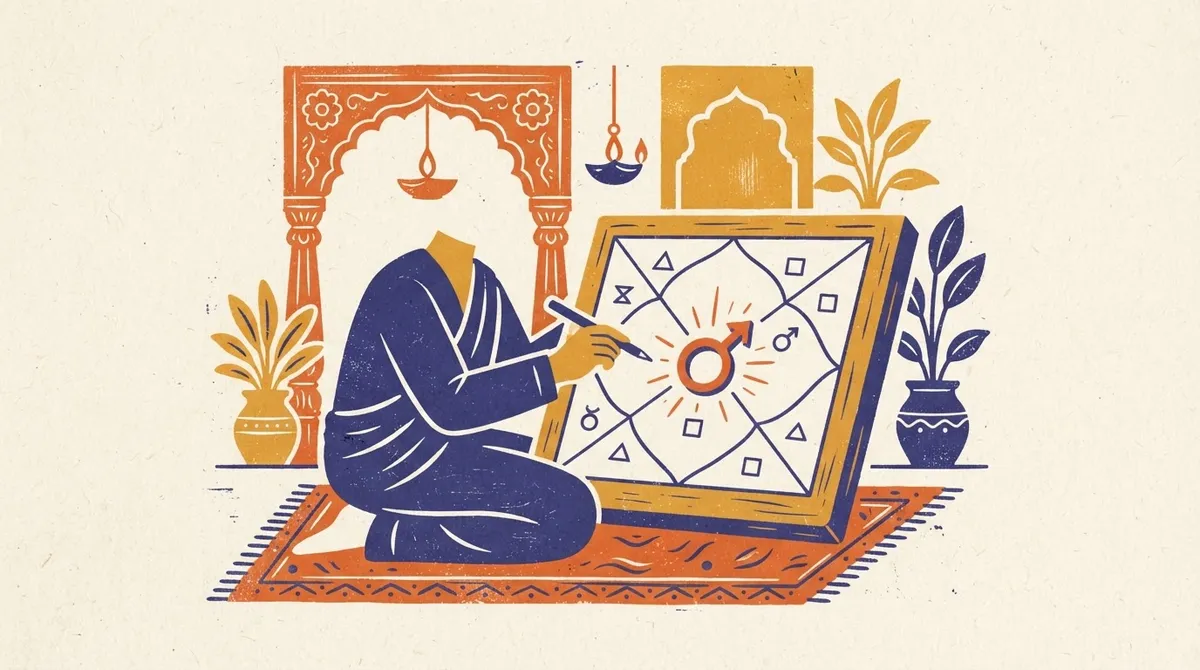
In this position, Mars sits in its own sign, which gives it strength and clarity. The tenth house provides a public outlet for action and leadership. This combination often points toward a career that involves active problem-solving, management, or technical expertise. The individual may thrive in environments that require direct initiative and independent decision-making.
Furthermore, Mars in the tenth house projects its aspects onto the first, fourth, and fifth houses. Its aspect on the first house can support physical vigor and confidence. Its aspect on the fourth house brings focused energy toward home life or property matters. Its aspect on the fifth house can stimulate creative projects and intellectual drive. This example illustrates how one planetary placement connects several life domains.
Reflecting Calmly on Mars in Your Birth Chart
Studying Mars in your birth chart is a helpful tool for self-awareness. It offers a calm reflection on your personal drive and behavioral habits. Mars highlights where you naturally apply effort and where you might need to cultivate extra patience.
If you notice moments of frustration or restlessness, observe them quietly. Channel excess energy into physical exercise, creative tasks, or organized work. Remember that planetary placements describe natural tendencies, not fixed destinations. You always have the freedom to choose your responses.
When checking your birth chart using online tools, your birth details are not stored on our servers. You can explore your chart at your own speed whenever you like.
Astrology is for reflection and guidance, and it is not a substitute for professional advice.