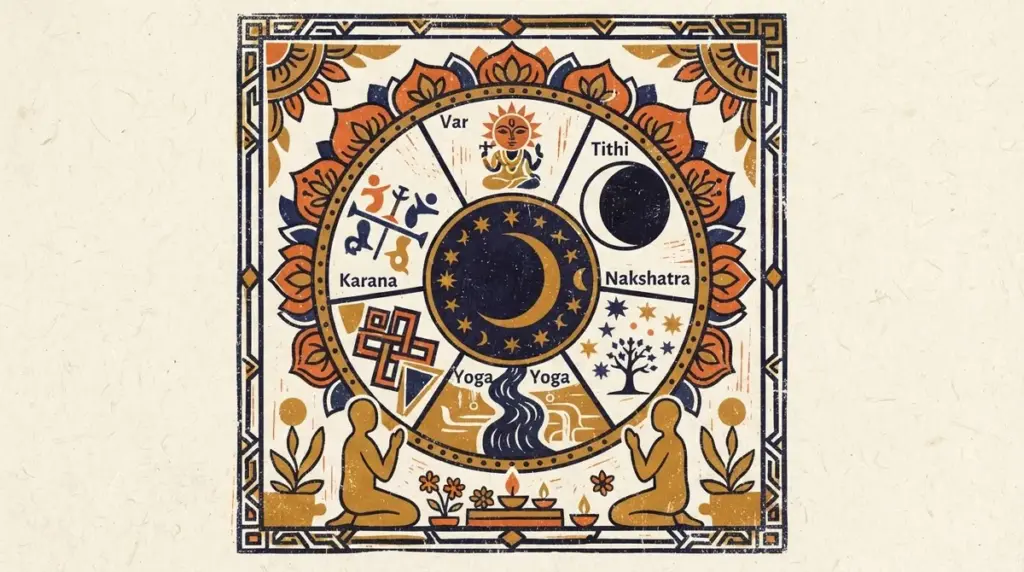
Understanding amavasya tithi everyday use helps you navigate the final lunar day of the dark fortnight with calm awareness. Amavasya is the Sanskrit word for the new Moon. It marks the precise time when the Sun and Moon sit closest together in the sky. In the traditional calendar system known as the five limbs of panchang, each tithi or lunar day represents a twelve-degree movement between these two luminaries. You can check the current lunar day using tools like the daily panchang.
What Amavasya Tithi Means in Daily Life
The dark moon phase carries a unique mood in daily life. Many people use this day to slow down their pace. It is a natural break in the monthly rhythm. Instead of rushing into new tasks, you might focus on rest and quiet reflection. The sky is dark because the Moon reflects no sunlight toward the Earth. Traditional households view this quiet phase as a time for inner replenishment rather than outward exertion. You can review your daily schedule on the panchang page to see when this phase arrives.
Traditional Views on amavasya tithi everyday use
Traditional texts approach this lunar day with caution regarding new ventures. Many schools suggest avoiding marriages, large purchases, or major travel starts on this date. Instead, the focus shifts toward ancestral remembrance and inner clearing. Rituals such as Pitru Tarpan, which are offerings to ancestors, often take place on this day. The tradition holds that the ancestral plane is closest during this dark phase. People also engage in quiet charity or simple acts of kindness within their communities.

What Observers Notice on the Dark Moon
Observers often report a distinct shift in energy as the dark moon approaches. Some feel a natural pull toward solitude. Others notice a quiet stillness in their evening routines. Because the night sky lacks moonlight, early evenings feel darker and more enclosed. This physical reality mirrors the internal tradition of turning your attention inward. You might spend the evening journaling or organizing your living space instead of attending large social gatherings.
Regional Differences in Calendar Calculation
Different regional calendars handle the lunar month in unique ways. In amanta systems, the lunar month ends with the new Moon. In purnimanta systems, the month ends with the full Moon, placing the new Moon right in the middle. Furthermore, when the new Moon falls on a Monday, it is called Somvati Amavasya. This specific weekday alignment carries special spiritual merit in many Hindu communities, leading to specialized local observances and quiet fasting.
A Calm Approach to the Dark Moon
Approaching the new Moon does not require complex rituals or rigid rules. You can simply use the day to reset your mind and body. Clear out old clutter from your desk. Write down thoughts you wish to release. Take a quiet walk after sunset without listening to music or podcasts. Let the stillness of the evening guide your thoughts. Astrology is for reflection and guidance, and it is not a substitute for professional advice.
A Worked Example of the Lunar Cycle
Imagine a person named Ravi who checks his calendar at the end of the dark fortnight. He sees that the fourteenth tithi ends and the new Moon tithi begins by afternoon. Ravi decides to postpone his planned business trip for the following day. He spends the evening cleaning his study and preparing a simple meal at home. By aligning his daily tasks with the natural quiet of the dark moon, he feels grounded and ready for the bright fortnight ahead.