
When exploring graha maitri koota common myths, it is helpful to look past the surface-level scores. Graha Maitri Koota is a 5-point factor in the wider Ashtakoota, or the system of eight categories, used to assess compatibility. It measures the mental and intellectual alignment between two people by comparing the lords of their Moon signs, known as Rashis. Many people worry that a low score here seals a fate, but this is a misunderstanding of how Vedic astrology functions. For a broader overview of the eight factors, visit Ashtakoota Matching: How It Is Scored Explained.

Understanding the basics of graha maitri koota common myths
The most persistent myth is that a low score in this category predicts the end of a relationship. In reality, this factor only accounts for 5 out of 36 points in the total system. It is meant to show the potential for emotional and mental harmony, not to serve as a final verdict. If you want to calculate your own compatibility scores, you can use our kundli-matching tool.
Another common error is viewing this factor as an isolated event. It must be read alongside other layers, such as the Navamsa, or the divisional chart of marriage, which you can explore through our navamsa-chart resource. Astrology provides a landscape for reflection, not a static map of unavoidable events.
How tradition links the planetary friendship factor to errors
Classical texts define planetary friendship based on the natural relationships between the lords of the Moon signs. Some planets are natural friends, while others are neutral or enemies. This matrix is not always symmetric. This means that if Planet A is a friend to Planet B, it does not always mean Planet B feels the same way toward Planet A. This asymmetry is a core part of the calculation that many beginners overlook.
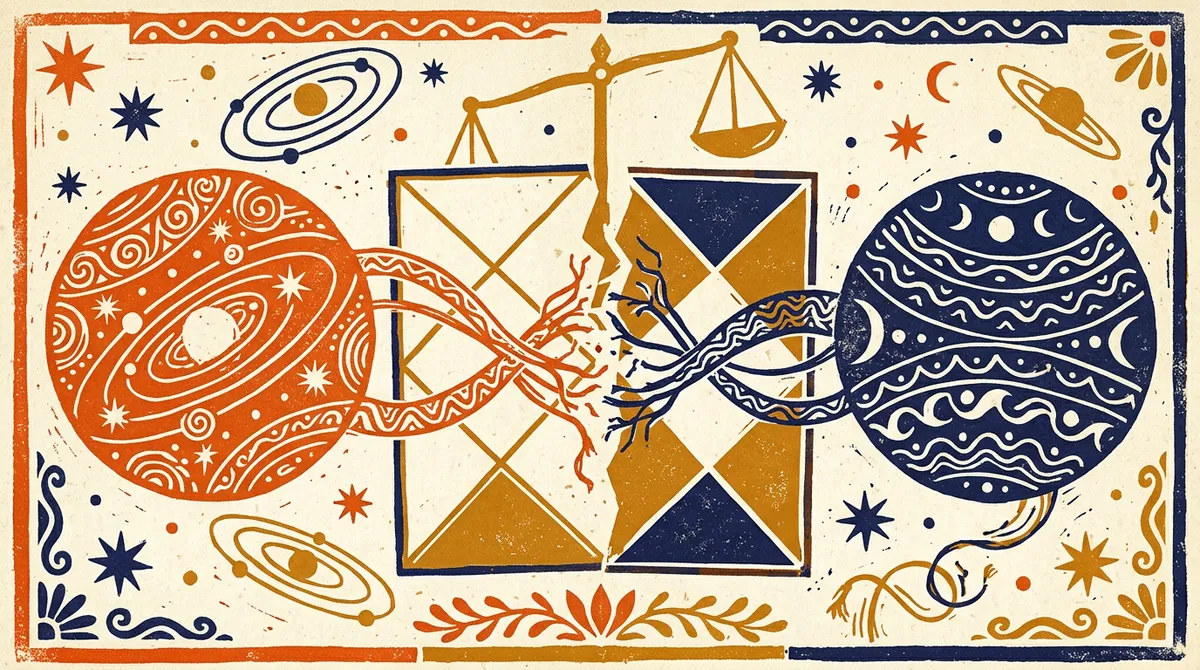
Tradition does not claim that a lack of friendship is a disaster. Instead, it suggests that such a pairing might require more conscious effort to align different mental perspectives. A low score here acts as an indicator, not a barrier. It invites the couple to communicate more clearly about their needs.
What readers notice about these common misconceptions
Many readers notice that their score is low but feel their relationship is strong. This happens because the 36-point system is a summary, not a complete life reading. Factors like the 7th house, which represents the partner, often carry more weight in the actual experience of a marriage. A high score in one area can often balance out a lower score in another.
People also often confuse the Koota score with a Dosha, or a specific affliction. Graha Maitri is not a Dosha. It is simply a measurement of initial mental resonance. A lower score does not mean you have a negative configuration in your chart.
School differences in interpreting planetary friendship
Different schools of astrology use slightly different versions of the planetary friendship table. Some traditions weigh certain planetary relationships more heavily than others. These variations can lead to slightly different point totals depending on the regional or lineage-based approach used by the astrologer.
It is common for students to find conflicting information in different books. This is a normal part of the tradition rather than a sign of error. Use these tools as guides for self-reflection rather than seeking a singular, universal truth.
A calm way to reflect on planetary compatibility
Astrology is for reflection and guidance, and it is not a substitute for professional advice. When looking at your scores, stay grounded in your actual lived experience. Use the data to understand your differences in communication style. If your planetary lords are not natural friends, you might find that you process emotions differently. This knowledge can help you build patience and empathy for one another.
Worked example of planetary friendship in practice
Imagine a bride with a Moon in Aries and a groom with a Moon in Capricorn. The lord of Aries is Mars, and the lord of Capricorn is Saturn. In many texts, Mars and Saturn are considered natural enemies. This would result in a lower score for Graha Maitri Koota.
However, this is only one small piece of the puzzle. An astrologer would then look at the house placements and the strength of these planets. If the rest of the chart shows strong support for the partnership, the low score in this one area becomes less significant. It simply highlights a difference in temperament that the couple can navigate with care.