
When people look at traditional chart matching, they often wonder about the varna koota minimum score view. Varna Koota is the first of eight parameters in the Ashtakoota system used in Vedic astrology to check marital compatibility. It is assigned a maximum of 1 point out of the total 36 points in Guna Milan. The system does not demand a high passing mark for this single factor alone. Instead, it offers a simple look at spiritual and ego alignment between partners. You can check your broader chart details using our kundli tool to see how various components fit together.

Many readers want to know if a zero score on this factor breaks a match. Traditional texts view the total score across all eight categories rather than isolating one point. A total score of 18 out of 36 points is typically seen as a baseline across the entire system. Because Varna Koota is just one point, losing it does not ruin an otherwise strong connection. The wider system looks at many layers of life and temperament.
What Varna Koota means for minimum score view
Varna Koota assesses spiritual and ego compatibility between partners. It classifies Moon signs into four distinct categories called Varnas. These categories are Brahmin, Kshatriya, Vaishya, and Shudra. The word Varna relates to quality or temperament in this context. It describes how a person approaches spiritual growth and daily duties. Traditional chart matching uses this parameter to see how well two inner natures blend. Each person receives a classification based on the birth Moon sign. The system then compares the two signs to award either zero or one point. No intermediate fractions exist for this specific test.
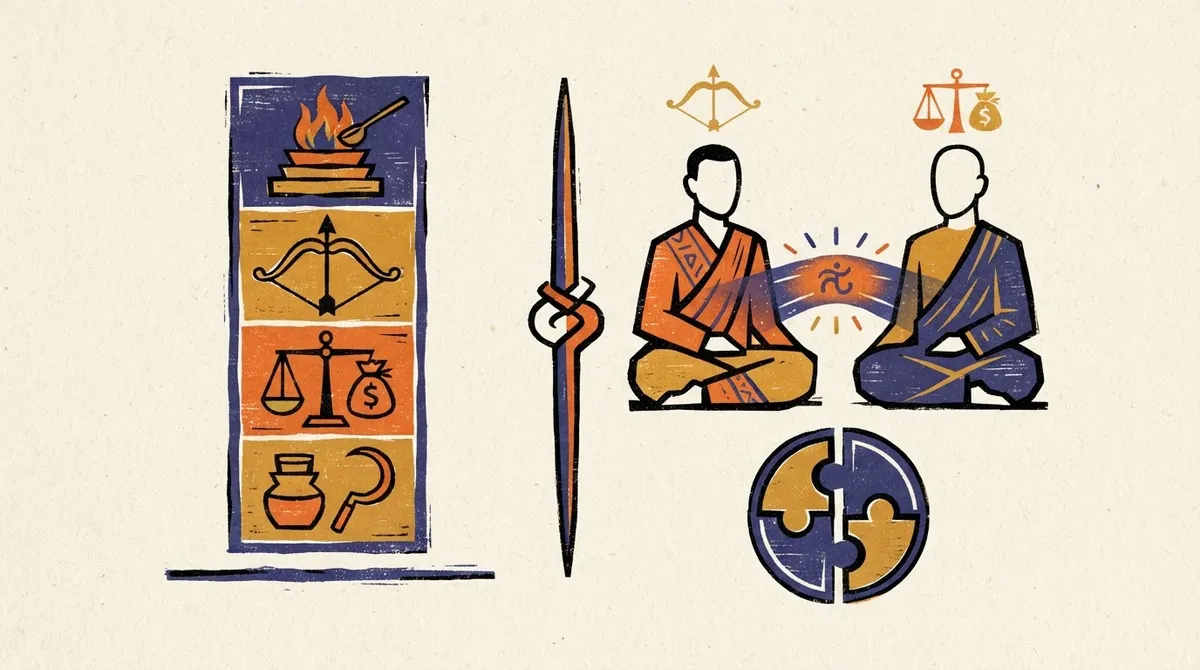
Understanding this factor helps readers put numerical scores into perspective. The score reflects general tendencies rather than rigid social outcomes. Modern interpretations often view Varna Koota as a guide for understanding temperamental alignment. It highlights how partners might handle shared goals and spiritual paths. When people examine their charts, they often use our kundli-matching tool to see all eight factors calculated clearly. This gives a complete picture without relying on any single score.
How tradition links Varna Koota with minimum score view
Traditional Jyotish texts outline specific rules for awarding the point in this category. A score of 1 is awarded if the groom’s Varna is equal to or higher than the bride’s Varna in the traditional hierarchy. A score of 0 is assigned if the bride’s Varna is ranked higher than the groom’s. Older schools viewed this structure as a reflection of traditional social order. Modern practitioners often explain it through the lens of ego compatibility and personal leadership styles. Despite these strict rules on paper, there is no specific minimum score requirement for Varna Koota alone. It is merely one small piece of a much larger puzzle.
When a zero appears for this factor, traditional astrologers look at other supporting areas. Factors like Nadi Koota and Gana Koota carry much higher point values and weight. For more insights on how different parameters work together, you can read our guide on Ashtakoota Matching: How It Is Scored Explained. Balance across the other seven parameters often offsets a zero score here. Tradition encourages a holistic view of the entire chart rather than panic over one missing point.
varna koota minimum score view: a worked example
Let us walk through a simple example to see how the scoring works in practice. Suppose the groom has his Moon sign in Cancer, which falls under the Brahmana category. Suppose the bride has her Moon sign in Aries, which falls under the Kshatriya category. In the traditional hierarchy, Brahmana is ranked above Kshatriya. Because the groom’s category is ranked higher than the bride’s category, the traditional rule awards 1 point for Varna Koota. If the signs were reversed, the score would be 0 out of 1 point.
This simple binary outcome often surprises beginners who expect a sliding scale. A score of 0 does not automatically disqualify a match. Many successful partnerships operate with a zero in this specific category. The other seven parameters provide plenty of room for overall harmony. Couples often find that open communication matters far more than a single point in an ancient table. Looking at the chart as a whole keeps expectations grounded and realistic.
Varna Koota and minimum score view: what readers notice
Readers often feel anxious when they see a zero score for this temperament factor. They worry it points to fundamental differences that cannot be bridged. Traditional commentary reassures us that human relationships rely on many shared values. Varna Koota simply highlights one layer of inner temperament and ego expression. People notice that emotional maturity and shared goals outweigh traditional category ranks in modern life. Mutual respect covers many areas that an old scoring system cannot measure.
Another common observation is how quickly people fixate on low numbers. When overall Guna Milan scores land above the traditional threshold of 18, individual zeros matter very little. Couples can bridge temperament gaps through patience and active listening. Astrology serves as a mirror for reflection rather than a strict rulebook for life choices. Understanding the limited scope of this 1-point factor brings peace of mind to many inquiring minds.
Where schools differ on Varna Koota and minimum score view
Different schools of Vedic astrology interpret the rigidity of Varna Koota in various ways. Orthodox lineages stick closely to the traditional hierarchy and view any reversal as a significant hurdle. They emphasize adherence to traditional structural norms in matchmaking. Other modern schools treat the categories as symbolic markers of psychological temperament. These progressive teachers argue that modern partnerships thrive on equality and mutual adaptation. They place very little weight on a zero score in this single category.
These differing views remind us that astrology is a vast and flexible tradition. No single school holds a monopoly on how to interpret compatibility charts. Practitioners often weigh the couple’s actual lived compatibility above any tabular score. When consulting different astrologers, you may hear contrasting advice on this exact topic. Choosing an approach that resonates with your personal values is always the best path forward.
A calm way to reflect on minimum score view with Varna Koota
Approaching chart matching requires a calm and balanced mindset. Treat Varna Koota as a gentle prompt for conversation rather than a definitive judgment. Talk about your individual goals, values, and approaches to daily life openly. Astrological scores can highlight areas where you might need extra patience with each other. They do not dictate the success or failure of a relationship.
Astrology is for reflection and guidance, and it is not a substitute for professional advice. Take time to build strong communication habits with your partner every single day. Use the insights from your chart to understand your differences without judgment. A thoughtful approach helps you appreciate the wisdom of tradition while honoring your own lived experience.