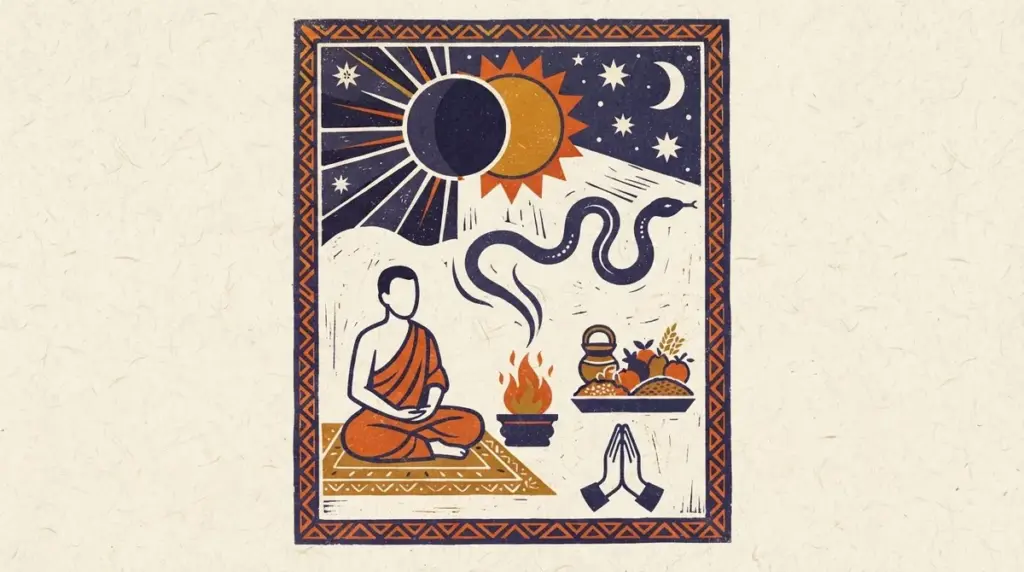
Grahan Dosha is a condition in a birth chart created when the Sun or Moon sits with the shadow planets. These shadow planets are Rahu and Ketu. When this condition appears, many look toward grahan dosha fasting traditions to find balance. These customs center on the Sutak, a period of perceived impurity before an eclipse. The goal is simple reflection during a time of change. You can use our kundli tool to see your chart layout. For a broader look at how conditions form, see our guide on kaal sarp dosha check.
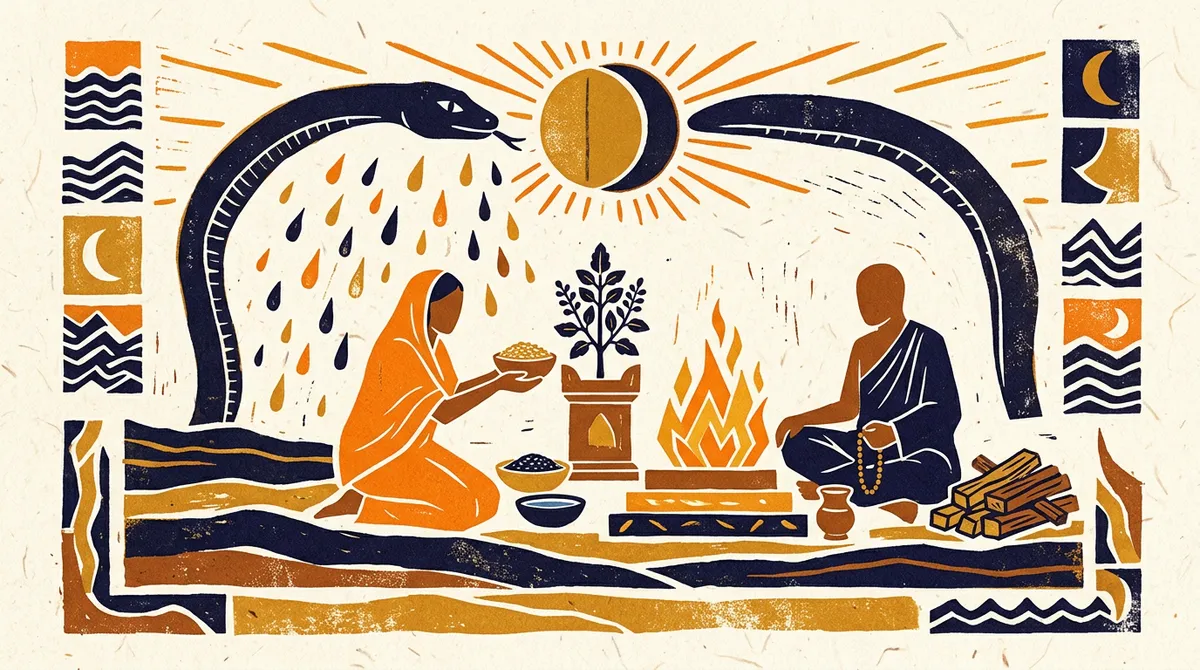
Grahan Dosha and its connection to fasting
Tradition treats the Sun and Moon as vital forces. An eclipse represents a temporary obscuration of these lights. This event is called a Grahan. The period before the event is known as the Sutak. This is a time to pause regular activities. Many believe this time influences the energy of the environment. Fasting helps one stay grounded during this phase. It is not about harsh restriction. It is about choosing simplicity while the sky shifts.
Understanding grahan dosha fasting traditions
When discussing grahan dosha fasting traditions, the focus is on the Sutak duration. For a solar eclipse, the Sutak usually begins twelve hours before. For a lunar eclipse, it starts nine hours prior. During this window, many choose to abstain from cooking. They also avoid eating solid or liquid food. This practice aims to keep the body and mind clear. The tradition emphasizes that food prepared before the Sutak is best left aside. It is often recommended to discard such items after the event concludes.
How observers experience these traditions
People often notice a sense of quiet during these hours. The atmosphere feels different to many practitioners. Those who follow these traditions often spend the time in meditation. They may also recite mantras to maintain focus. This is seen as a way to counteract the intensity of the eclipse. It is common to bathe immediately after the event ends. This act symbolizes a fresh start. It is a physical way to cleanse the energy of the day.
Where schools of thought diverge
Not all schools agree on the strictness of these rules. Some traditions emphasize that the young and the elderly have different needs. For example, children and the sick may have a shorter window. They might only fast for three hours before the eclipse. Other scholars suggest that the intensity of the dosha in a chart changes the approach. They look at house placement and planetary aspects. Always consider your own health first when looking at these guidelines.
A mindful approach to traditional practices
Reflection is the core of these customs. You do not need to feel anxiety about an eclipse. Instead, view it as a natural cycle in the sky. Use the time to rest and look inward. If you have concerns, remember that astrology is for reflection and guidance, and it is not a substitute for professional advice. Keeping your space peaceful is more important than rigid adherence. You can also review your panchang to see upcoming dates.
Practical steps for your daily routine
If you choose to follow these customs, keep it simple. Place Tulasi leaves or Kusha grass in your water containers. This is a common way to protect stored items. Avoid heavy tasks during the peak of the eclipse. Focus on quiet activities like reading or gentle breathing. Once the event is over, take a warm bath. This simple sequence helps you transition back to your normal rhythm. Birth details are not stored on our servers.